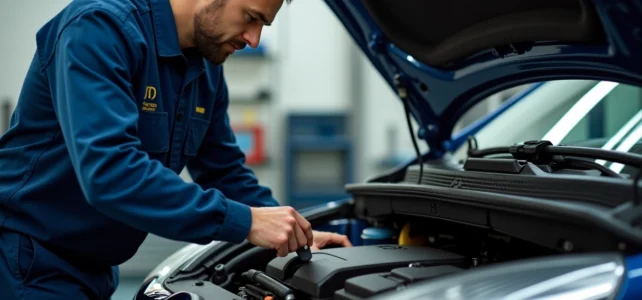
The Renault Scénic 2, popular among families for its space and modularity, is not without mechanical issues. Some problems frequently arise and can disrupt daily commutes.
Owners often notice injection problems or electronic malfunctions. Failures of the electric handbrake or cruise control are also among the troubles. Knowing these malfunctions allows for better anticipation and resolution without stress.
Related reading : How to identify the country of origin of an international call?
By identifying warning signs, such as illuminated indicators or suspicious noises, one can take necessary measures to avoid costly repairs and extend the life of the vehicle.
Common breakdowns on the Renault Scénic 2
The Renault Scénic II, produced from 2003 to 2009, is known for its comfort and spacious interior. However, it has recurring mechanical and electrical problems. Among the components that often fail are the injectors, the heating fan, the turbo, and the automatic transmission.
You may also like : The different file formats on the internet and how to manage them effectively
Electrical problems
The Scénic II frequently suffers from electrical problems. These malfunctions affect various essential components such as headlights, GPS, car radio, and battery. Regular checks of the fuse box and the fuses themselves are necessary to prevent these failures. The OBD port allows for precise diagnostics, essential for identifying the exact source of the problem.
Injectors
The injectors often pose problems on this model. Symptoms include difficult starts, loss of power, or excessive fuel consumption. To remedy these issues, regular maintenance of the injection system is fundamental. Replacing faulty injectors may also be necessary to restore engine performance.
Heating fan
The heating fan is another weak point. Owners report stoppages, lack of warm air, or unusual noises. If the Scenic 2 fan is not working, first check the fuses and then inspect the fan motor. Repair or replacement may be required to restore optimal thermal comfort.
Turbo and automatic transmission
The turbo and the automatic transmission are also prone to failures. The turbo can cause a loss of power, whistling, or abnormal smoke. The automatic transmission, on the other hand, can lead to jolts, difficulties in shifting gears, and dull noises. Regular maintenance and consulting a professional for thorough diagnostics are essential to prevent these issues. 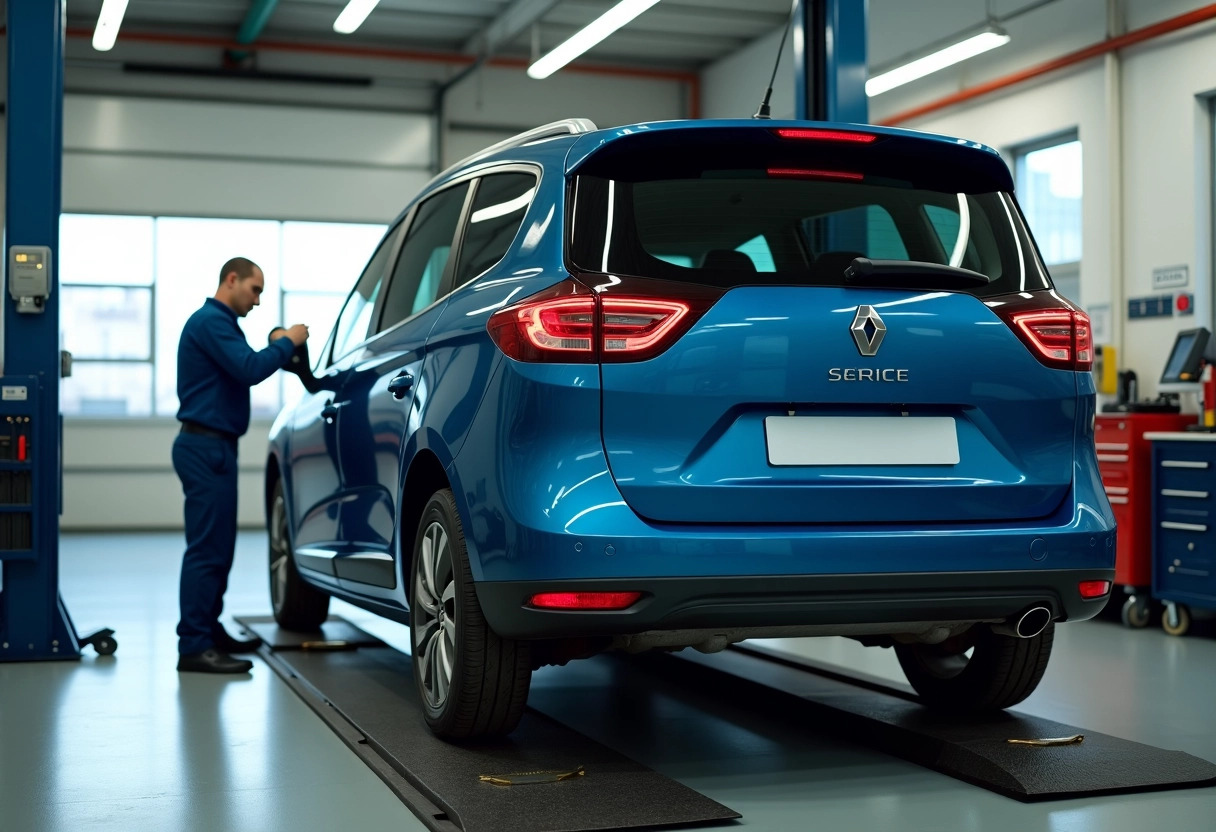
How to identify and resolve breakdowns on the Renault Scénic 2
The Renault Scénic II, produced from 2003 to 2009, suffers from various mechanical and electrical problems. Identifying these breakdowns and addressing them requires a methodical approach.
Using the OBD port
The OBD port (On-Board Diagnostics) is a valuable tool for diagnosing electrical and mechanical problems. It allows you to read error codes and quickly identify faulty components. To use it:
- Connect the OBD port to your vehicle.
- Run a scan to detect error codes.
- Interpret the codes to pinpoint faulty components.
Common electrical problems
Electrical problems often affect headlights, GPS, car radio, and battery. To resolve these malfunctions:
- Check the fuse box and replace faulty fuses.
- Inspect electrical connections for damaged wires or loose connections.
- Use a multimeter to test the battery and alternator voltage.
Injectors and turbo
Faulty injectors lead to difficult starts and loss of power. To address this:
- Clean the injectors with a specific product or replace them if necessary.
- Check the injection system for fuel leaks.
For the turbo:
- Listen for whistling and watch for blue or black smoke.
- Replace the turbo if symptoms persist.
Maintaining your Renault Scénic II in good condition requires constant vigilance and prompt interventions in case of problems.