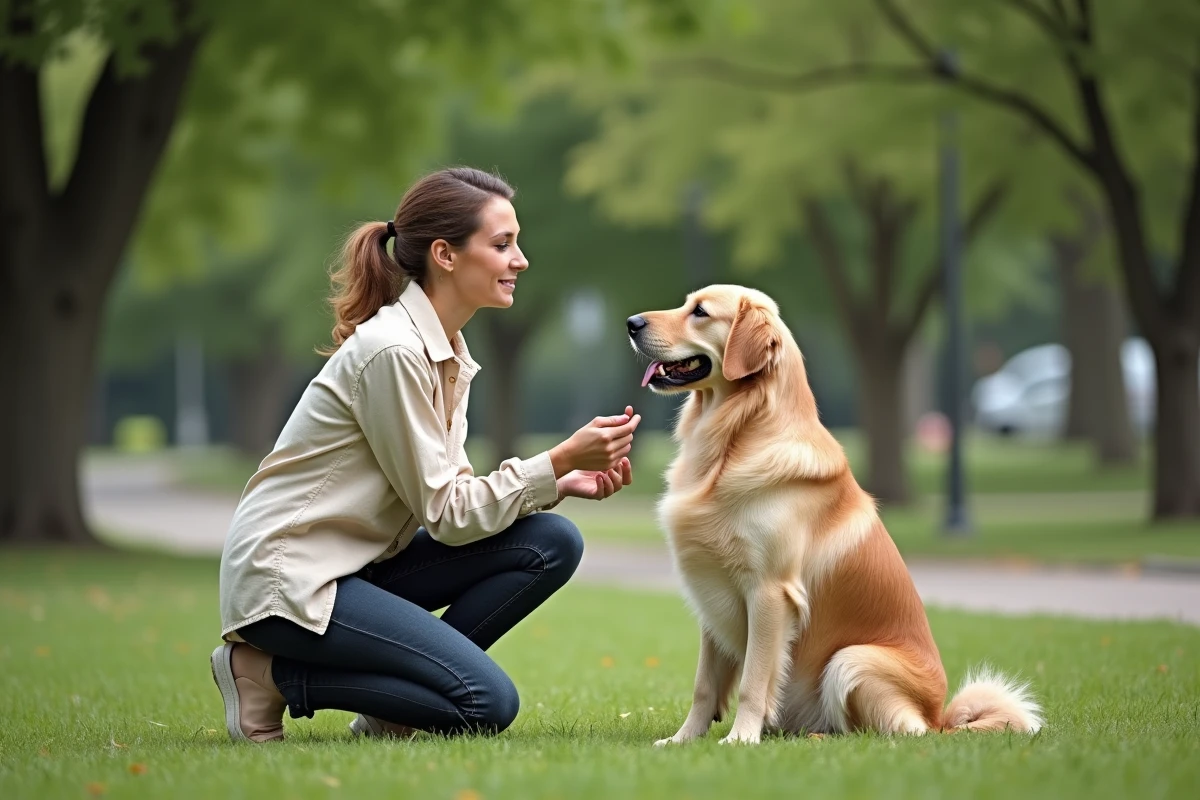
A dog that growls when you touch its back leg, another that refuses to come when called for a few weeks, a third that barks as soon as the front door opens: several of these behaviors may have a medical, sensory, or sleep-related origin. The approaches to understanding and training a dog on a daily basis are evolving accordingly.
Veterinary assessment before dog training: a prerequisite not to be overlooked
Since 2023-2024, several French-speaking veterinary and ethological bodies recommend a systematic veterinary assessment before concluding a training issue in adult dogs. Early arthritis, chronic pain, vision or hearing problems: these physiological causes are among the most common explanations for behaviors mistakenly interpreted as disobedience.
A dog that refuses to sit may be suffering from a painful joint. An animal that growls when handled may be protecting a sensitive area, without any intention of “testing” its owner.
First directing to a veterinarian specialized in pain or a veterinary behaviorist completely changes the management approach. To adapt your approach by crossing behavioral and physiological dimensions, the advice from Syntonie Animale is a useful resource.
Dog sleep and learning: a direct link
Specialists now recommend starting any training program with a sleep audit of the dog: sleeping place, duration, interruptions, daily rhythm. A dog that sleeps poorly or not enough learns less effectively. The parallel with sleep debt in humans is direct.
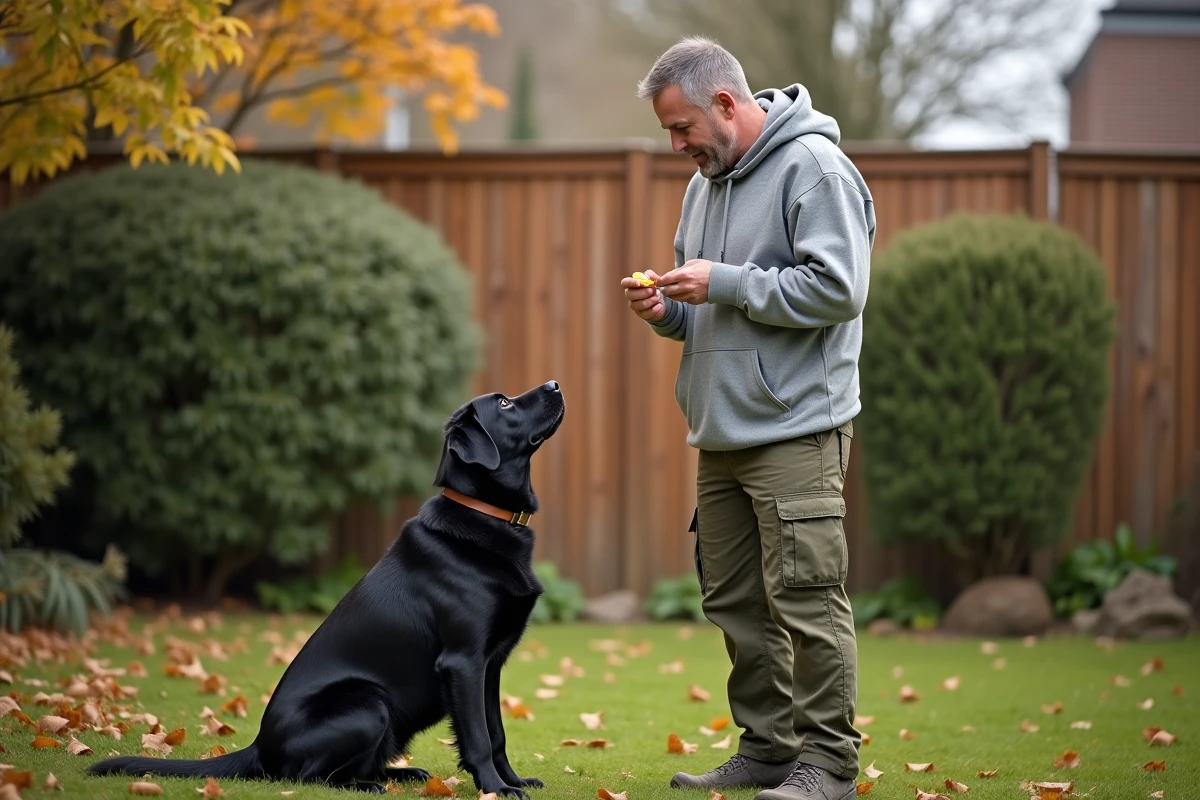
The puppy needs long and frequent rest periods. In adults, a sleeping environment disturbed by noise, traffic, or light degrades concentration during work sessions.
The necessary rest duration varies by breed and size, but the observation remains the same: a rested dog learns faster and retains better. Before multiplying recall or leash walking exercises, it is better to check that the animal has a quiet space and that its rest rhythm is not regularly interrupted.
Olfactory enrichment as a basis for dog training
The classic approach places recall, “sit,” and leash walking at the top of the priorities. A recent trend, driven by trainers and veterinarians, reverses this logic: routines of olfactory enrichment and structured freedom are considered a prerequisite for any politeness or recall work, not a bonus activity.
A dog whose exploratory needs remain unmet will be more reactive, more distracted, and less available to learn. Several accessible practices stem from this:
- Allowing the dog to sniff freely during walks instead of keeping it at heel constantly, using a long line in suitable areas
- Offering food search games at home (hidden treats, sniffing mats) before training sessions
- Varying walking environments to stimulate the sense of smell with new scents, contributing to positive mental fatigue
After about thirty minutes of exploration and sniffing, the dog is generally calmer and more receptive to commands. This sequence, exploration first then learning, changes the daily dynamic between the owner and the animal.
Non-aversive training methods: where does Europe stand?
The movement towards non-aversive training methods now extends beyond the circle of professional trainers. Several European countries have initiated regulatory or ethical changes that also concern private owners. Choke collars and electric collars are increasingly subject to restrictions.
In France, the regulatory framework is less strict than in some neighboring countries. The available data does not allow for large-scale conclusions on the comparative effectiveness of different methods. However, feedback from veterinary behaviorists converges on one point: techniques based on physical punishment or intimidation generate more anxious behaviors in the medium term.
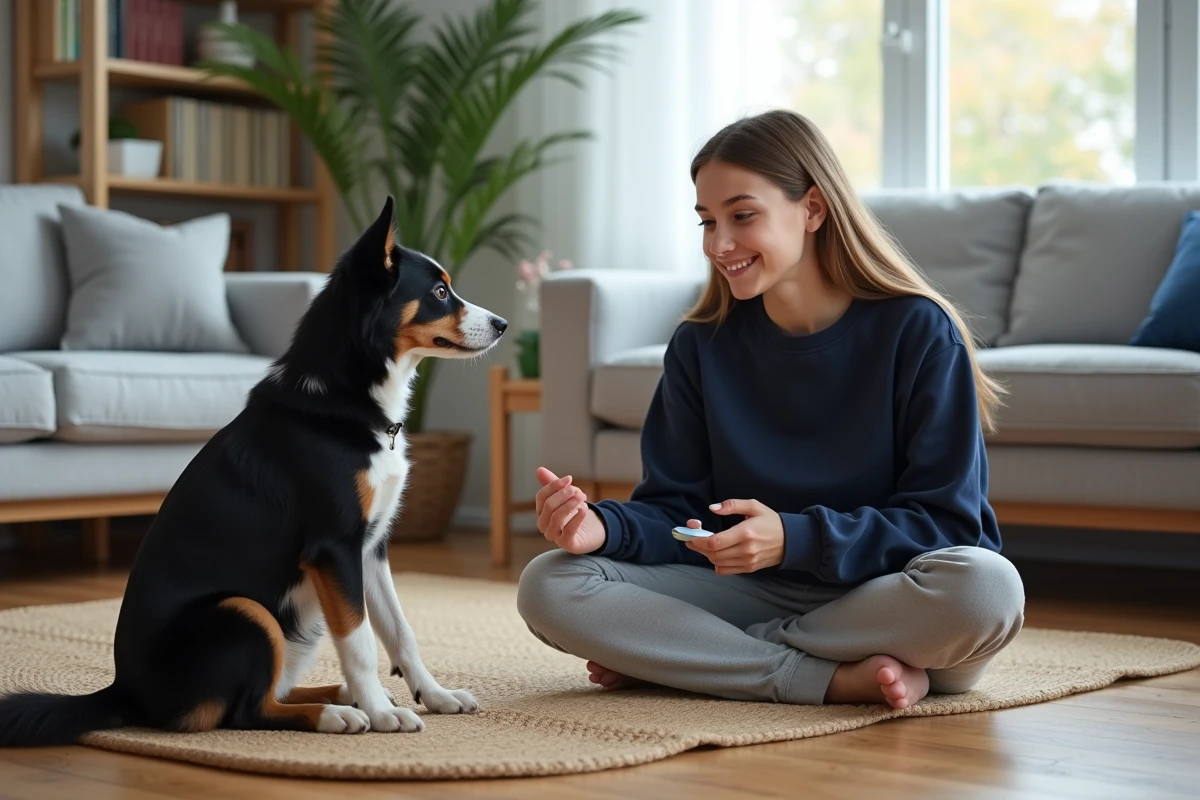
Positive reinforcement, which involves rewarding the desired behavior rather than punishing the undesirable behavior, remains the most recommended method by French-speaking veterinary organizations. However, “positive” does not mean “without structure”: the dog needs stable and consistent rules, applied by all household members.
Consistency and timing: what makes the difference daily
A training program can rely on the right method and still fail. The problem often lies in the consistency of commands or the timing of rewards. The dog associates its behavior with the consequence that follows in the seconds that come. A ten-second delay is enough to lose most of the effect.
The points that really matter:
- Always use the same word for the same request, and ensure that everyone in the household uses the same vocabulary
- Reward at the precise moment when the expected behavior occurs, not afterward
- Keep sessions short and frequent rather than a long weekly session, as the dog learns better through spaced repetitions
- Do not repeat a command several times in a row, which teaches the dog to ignore the first request
An animal that perceives clear and predictable rules develops fewer anxious behaviors and cooperates more willingly. The relationship between the owner and their dog is built on this regularity.
Health, rest, sensory needs: these three parameters condition the dog’s receptiveness long before the first command is given. A recent veterinary assessment and an appropriate sleeping environment remain the two most cost-effective checks for anyone wishing to progress in dog training.