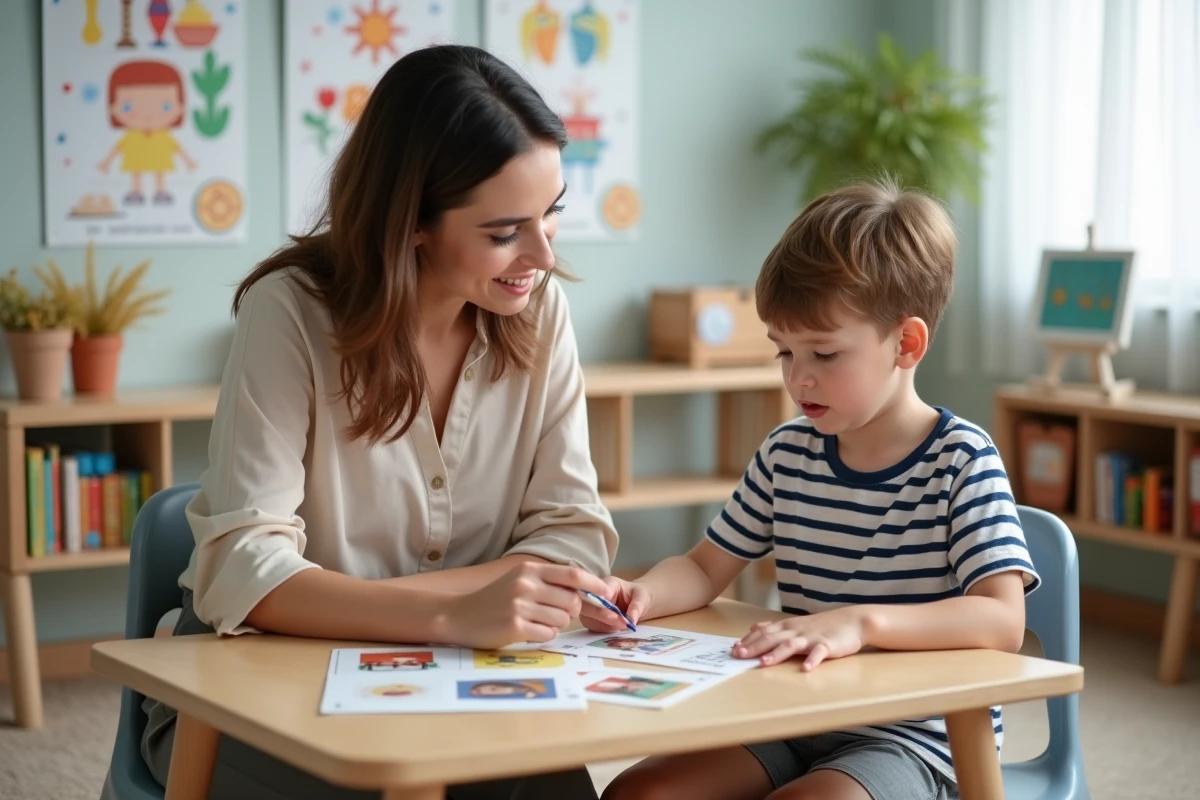
One in ten children has difficulties acquiring language, according to the latest data from the Haute Autorité de Santé. Articulation and language disorders are among the most common reasons for consulting a speech therapist, impacting both schooling and social interactions.
Some symptoms go unnoticed until the child starts school, while others manifest as early as the first words. The origin may be neurological, genetic, or environmental, and the solutions vary depending on the nature and severity of the disorder. Support strategies rely on individualized care, backed by specialized professionals.
Articulation and language disorders: understanding the differences and challenges
Distinguishing between articulation disorders and language disorders is not trivial: it is the key to appropriate care. When articulation goes awry, it is sometimes referred to as a phonological disorder, where the child struggles with the production of certain sounds, replacing, omitting, or distorting phonemes. This muddles the understanding of their speech. In contrast, a language disorder, with dysphasia being the most pronounced form, affects the very structure of language: limited vocabulary, unfinished sentences, and disorganized syntax create a complex picture.
The origins are multiple: genetic predisposition, neurological peculiarities, or environmental influences. Some developmental language disorders (DLD), such as dysphasia, occur even in the absence of intellectual disability or sensory problems. This diversity makes diagnosis sometimes tricky. Following the thread of development, from the first words to the onset of writing, becomes crucial.
This topic extends beyond the medical sphere. The consequences spill over into school, disrupt self-confidence, and weigh on social relationships. Being attentive to the first alerts and seeking expert resources, such as those offered at https://www.drhackney.net/, helps limit disruptions in educational pathways and supports inclusion. We now speak of developmental language disorder where we once referred to “dysphasia,” an evolution that reflects the need to recognize the variety of profiles and adapt support to each individual story.
What signs should raise concern? Symptoms, repercussions, and points of vigilance
Some signs deserve particular attention to identify a language disorder or articulation disorder from a young age. A child may struggle to pronounce their first words, or their sentences may remain difficult to understand for a long time. Sometimes, difficulties persist even in a stimulating family environment, without hearing impairment or sensory issues. Here are the main signals to watch for:
- Absence of babbling or first words after 18 months.
- Inability to combine two words by around 2 and a half years.
- Recurring confusions between certain sounds, such as replacing “k” with “t”.
- A speech that remains unclear to anyone outside the immediate circle.
- A social discomfort that sets in, with the child avoiding communication or withdrawing.
School quickly becomes the revealing factor. Language disorders exhaust the child, complicate the learning of reading and writing, and lead to persistent spelling mistakes. Understanding instructions, retaining information, or handling abstract vocabulary can sometimes become a challenge. Some children, to escape discomfort, prefer to remain silent or divert the conversation, hoping to go unnoticed.
The role of those around them is crucial: watching for subtle signals, refusing to attribute these difficulties to a lack of stimulation or education. The developmental language disorder corresponds to a lasting alteration in development, which calls for precise identification and tailored solutions. Frequency, intensity, and persistence of signs guide reflection and direct towards the right interlocutors.

Concrete solutions to support and treat language disorders
In the face of a developmental language disorder, the first step is to consult a health professional for a thorough assessment. General practitioners, pediatricians, or primary care physicians then guide towards appropriate evaluations, excluding any organic or neurological causes and clarifying the nature of the disorder.
Speech therapy remains the cornerstone of support. It targets the specific needs of each child, including articulation, comprehension, and oral or written expression, and adjusts to their pace. Early intervention, rooted in regularity, paves the way for real progress and limits difficulties at school. Experience shows that the earlier the identification, the more favorable the outcome.
Sometimes, coordination with other professionals is necessary. Speech therapists, psychomotor therapists, psychologists, and reference teachers combine their expertise. This teamwork allows for the development of a personalized educational project (PPS), adjustments to educational provisions, and support for the child in their educational journey.
In France, obtaining appropriate follow-up can sometimes be complex. Waiting times, recognition of developmental language disorders, and cooperation among professionals still pose challenges. However, the commitment of families, collaboration among various stakeholders, and ongoing training for teachers create real advancements to support affected children and make their daily lives easier.
In the face of the complexity of language, every progress counts. Words, once tamed, open unexpected doors and reshape the landscape of confidence. Nothing is set in stone: each child’s story remains to be written, one step at a time.